

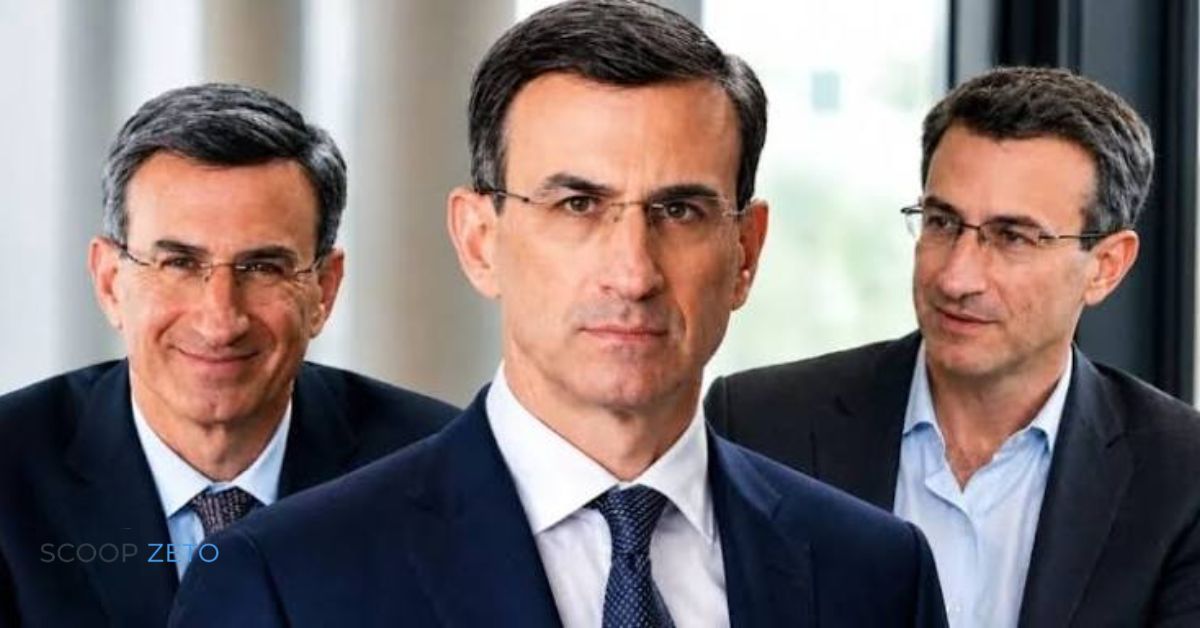
Peter Orszag bald is a popular search because the Lazard chief executive’s clean-shaven head is as recognizable as his résumé. Peter Richard Orszag, born December 16, 1968, in Boston, is CEO and Chairman of Lazard, the global financial advisory and asset management firm. Before Wall Street, he directed the Congressional Budget Office and the Office of Management and Budget, shaping fiscal policy and healthcare reform in Washington.
This biography covers his education, government roles, private sector rise, personal life, and the shaved-head look that became part of his personal brand, so you get the full picture in one place.
Early Life and Academic Excellence
Peter Orszag was born in Boston and raised in Massachusetts in an academic household. His father, Steven Orszag, was a respected applied mathematician at Yale, and the family’s focus on analytical thinking shaped his early path. His full name is Peter Richard Orszag, and no different birth name is on record, so searches for “Peter Orszag real name” lead to the same answer.
His academic background is strong at every stage:
- Phillips Exeter Academy, the elite New Hampshire boarding school, graduating in 1987
- Princeton University, earning an A.B. in economics in 1991
- London School of Economics (LSE), earning an M.Sc. in 1992 and a Ph.D. in 1997
Princeton, an Ivy League university in New Jersey, gave him the quantitative foundation he later applied to budgets and markets. These academic achievements opened doors to government service well before he turned 30.
Further Studies as a Marshall Scholar

After Princeton, Orszag moved to the London School of Economics, a leading social science university, as a Marshall Scholar. The Marshall Scholarship is a prestigious, government-funded British award that sends high-achieving American graduates to study in the United Kingdom. It places him in a select group of scholars.
His LSE years produced two degrees and a doctorate. His doctoral work centered on economics, with an early interest in public finance, pensions, and how households save. Those themes ran through his later work on retirement security and national savings. The training also gave him a technical credibility that served him in policy fights over numbers and projections.
Early Career and Clinton Administration Roles
Orszag entered public service in the 1990s under President Bill Clinton. He worked with the Council of Economic Advisers (CEA), the White House body that advises the president on economic matters. There he supported economists on tax, budget, and social insurance questions.
In 1997 and 1998 he served as Special Assistant to the President for Economic Policy. Among his government roles, this was his first senior White House post. It exposed him to the mechanics of the federal budget, Social Security debates, and how policy gets built across agencies. He also co-founded a consulting firm that advised clients on public finance, a step that bridged the public and private worlds.
Think Tanks and The Hamilton Project
After the White House, Orszag built a strong reputation in research. He became a senior fellow at the Brookings Institution, a Washington think tank known for centrist, data-driven research. He also worked on issues connected to the Pew Charitable Trusts, a nonprofit that funds policy research.
His most visible think tank contribution was co-founding The Hamilton Project at Brookings in 2006. Former Treasury Secretary Robert Rubin, a Wall Street leader who served under Clinton, backed the effort. The project promotes policy ideas that combine economic growth with broad opportunity. Orszag also helped lead the Retirement Security Project, which studied how to improve pension security and encourage saving. His interest in retirement security and national savings from this period remains a defining part of his public policy record.
Leadership at the Congressional Budget Office

In January 2007, Orszag became director of the Congressional Budget Office (CBO), serving until 2008. The CBO is the nonpartisan agency that gives Congress cost estimates and economic forecasts. Its neutrality gives its numbers weight on both sides of the aisle.
Under his leadership, the CBO paid much closer attention to healthcare economics. He argued that rising medical costs were the main long-term threat to the federal budget and the national debt. He pushed research on comparative effectiveness, which compares treatments to see what works best for the money. He also warned about structural deficits, meaning gaps between spending and revenue that persist even in good economic times. This work set the stage for his next role.
Serving as OMB Director Under President Obama
In 2009, President Barack Obama appointed Orszag director of the Office of Management and Budget (OMB), a post he held until 2010. The OMB prepares the president’s budget and oversees how federal agencies spend money.
He took the job during the financial crisis, and his work centered on two major efforts:
- The American Recovery and Reinvestment Act of 2009, the stimulus package meant to revive the economy after the crash
- The Affordable Care Act (ACA), where he helped shape the cost and payment ideas behind the healthcare law
The Distinct Aesthetic of Peter Orszag Bald
Orszag is bald, and he keeps a clean-shaven head. This is the reason the Peter Orszag bald look draws so many searches. In photos and TV interviews, the shaved head, rimless or simple glasses, and tailored dark suits create a consistent, polished image.
The clean-shaven look is part of his public image. It reads as disciplined and unfussy, which suits a leader known for analytical thinking. For many bald executives, a shaved head signals confidence and removes distraction, and observers often connect that style with Orszag. No one needs to speculate about the reason for his look. What matters is that his physical appearance became a recognizable trademark, much like a signature, and it supports a personal brand built on seriousness and clarity.
Transition to Private Sector and Citigroup
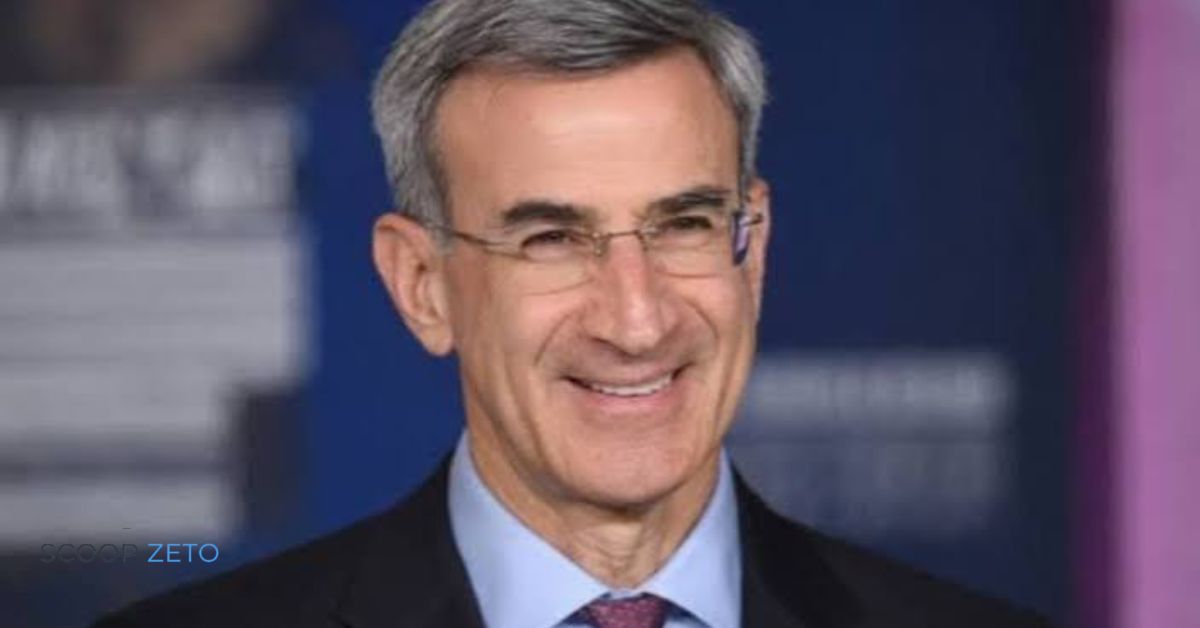
Orszag left the Obama administration in 2010 and moved into finance. In 2011 he joined Citigroup, a major global bank, as Vice Chairman of Corporate and Investment Banking. He also led its Financial Strategy and Solutions Group, which advised large clients on complex financial decisions.
His time at Citigroup ran until 2016. It gave him hands-on experience in investment banking, capital markets, and client advisory work. The move also drew public attention, since few people go from running the OMB to a senior Wall Street role. It showed how his policy knowledge could help institutions understand regulation, healthcare, and macroeconomics.
Joining Lazard and Rising to CEO
Orszag joined Lazard in 2016, a firm founded in 1848 and known for mergers and acquisitions advice, restructuring, and asset management. He first served as Vice Chairman of Investment Banking and Global Co-Head of Healthcare, then took charge of North American Mergers & Acquisitions work and led Lazard’s Financial Advisory business from 2019 to 2023.
In 2023 he became CEO and Chairman of Lazard. As Peter Orszag, Lazard CEO, he oversees both the advisory and asset management arms of the company. His rise combines a rare mix of government and corporate leadership.
| Period | Role | Organization |
| 2007–2008 | Director | Congressional Budget Office |
| 2009–2010 | Director | Office of Management and Budget |
| 2011–2016 | Vice Chairman, Corporate & Investment Banking | Citigroup |
| 2019–2023 | Head of Financial Advisory | Lazard |
| 2023–present | CEO and Chairman | Lazard |
Executive Philosophy and Leadership Style
Orszag’s leadership style rests on data, clarity, and long-term thinking. He is known for approaching decisions like an economist, weighing evidence before acting. His executive philosophy favors close client relationships, since advisory firms live on trust and reputation.
Key traits often linked to his corporate leadership include:
- A strong focus on analysis and measurable results
- Emphasis on corporate governance and independent advice
- Willingness to explain complex ideas in plain language
- Attention to healthcare, technology, and global deal flow
Personal Life and Public Presence
Orszag married Bianna Golodryga in 2010. Bianna Golodryga is a journalist and television anchor who has worked at CNN, CBS News, and Yahoo Finance. She was born in Moscow and raised in the United States. The couple’s relationship links Washington policy and the media world, and searches for “Peter Orszag wife” and “Peter Orszag Bianna Golodryga” are common for this reason.
Details about his wider family are kept mostly private. Based on his date of birth, Peter Orszag’s age is 57 as of October 2026, and he turns 58 in December. He is also reported to be an active runner and has been described as a marathon runner, which fits his disciplined public image. As for Peter Orszag’s net worth, no verified public figure exists. Estimates online are speculative, so treat them with caution.
Board Memberships and Advisory Roles
Beyond his main jobs, Orszag has served in many advisory and institutional roles. He is a member of the Council on Foreign Relations (CFR), a nonpartisan foreign policy organization. He has also been tied to the Peterson Institute for International Economics, a research center focused on global economic issues, and is a member of the National Academy of Medicine, which honors leaders in health and medicine. He has also been linked to healthcare institutions such as Mount Sinai Hospital in New York.
Impact on Healthcare Reform and Economic Policy
Healthcare is the topic most tied to Orszag’s policy legacy. At the CBO and OMB, he argued that controlling medical spending was key to fixing the federal budget. His healthcare economics work promoted payment reform, quality measurement, and evidence-based care.
Beyond health, his fiscal policy work covered:
- Reducing structural deficits and managing the national debt
- Improving pension security and retirement saving
- Using stimulus carefully during downturns
Media Appearances and Public Intellectualism
Orszag is a frequent voice in the media. His media appearances include interviews on CNBC and Bloomberg TV, where he comments on markets, deals, and the economy. He has also written as a columnist for Bloomberg Opinion, explaining policy topics to general readers. He speaks at events such as the World Economic Forum in Davos, a gathering of global business and political leaders.
This steady public profile makes him a clear example of public intellectualism, meaning the sharing of expert knowledge with a wide audience. His public image blends the authority of a former budget director with the practical view of a banker.
Cultural Recognition and Modern Professional Identity
For many people, Orszag represents a modern professional identity where expertise, appearance, and communication work together. The Peter Orszag bald look is often discussed alongside other recognizable bald leaders because it shows that a confident, clean presentation can strengthen a professional brand.
His appearance is only part of the story, however. People remember him because the look matches a serious résumé: Ivy League and LSE education, top government roles, and leadership at a historic financial firm. Together, these elements form a coherent personal brand that is easy to recognize and hard to confuse with anyone else.
Read More : Kristine Sarayan: Life Beyond Gilmore Girls’ Chrissy 2026
Summary of Key Milestones
| Milestone | Detail |
| Date of birth | December 16, 1968, Boston |
| Prep school | Phillips Exeter Academy, 1987 |
| Undergraduate | Princeton University, A.B., 1991 |
| Graduate | LSE, M.Sc. 1992 and Ph.D. 1997 |
| White House | Special Assistant for Economic Policy, 1997–1998 |
| Think tank | Co-founded The Hamilton Project at Brookings |
| CBO | Director, 2007–2008 |
| OMB | Director, 2009–2010 |
| Citigroup | Vice Chairman, 2011–2016 |
| Lazard | CEO and Chairman, 2023–present |
| Spouse | Bianna Golodryga, married 2010 |
Frequently Asked Questions
Who is Peter Orszag?
Peter Richard Orszag is an American economist, former government official, and financial executive. Born in Boston on December 16, 1968, he is CEO and Chairman of Lazard. He previously directed the Congressional Budget Office and the Office of Management and Budget.
Why is the phrase “peter orszag bald” popular?
People search it because Orszag has a recognizable clean-shaven head that appears in his TV interviews and public photos. The look has become part of his public image and personal brand, which is why curiosity about his appearance sits alongside interest in his career.
What roles did Peter Orszag hold in the U.S. government?
He served as Special Assistant to the President for Economic Policy (1997–1998) under President Bill Clinton, Director of the Congressional Budget Office (2007–2008), and Director of the Office of Management and Budget (2009–2010) under President Barack Obama.
What is Peter Orszag’s educational background?
He attended Phillips Exeter Academy (1987), earned an A.B. from Princeton University (1991), and completed an M.Sc. (1992) and a Ph.D. (1997) at the London School of Economics as a Marshall Scholar.
What is Peter Orszag’s current executive position?
He is CEO and Chairman of Lazard, a role he has held since 2023. Before that, he led Lazard’s Financial Advisory business from 2019 to 2023.
Who is Peter Orszag married to?
He is married to Bianna Golodryga, a journalist and television anchor, whom he wed in 2010.
Conclusion
Peter Orszag’s story goes well beyond the search term that brings many people to it. From Phillips Exeter and Princeton to the LSE as a Marshall Scholar, he built an academic base that carried him through the Clinton White House, the CBO, and the OMB. He then took that experience to Citigroup and Lazard, where he now leads one of the world’s best-known advisory firms. His clean-shaven head is a memorable part of his personal brand, but his lasting influence lies in his work on fiscal policy, healthcare reform, retirement security, and corporate leadership.
Jasper Vale is a measurement focused writer at Scoop Zeto, creating clear, practical content about units, conversions, calculations, and everyday measurement concepts. Jasper focuses on research, accuracy, and easy explanations, helping readers understand measurement topics with confidence. His editorial approach emphasizes useful information, careful checking, and reader friendly guidance.